
External Affairs Minister S Jaishankar stated that the world is entering an age of flux marked by conflicts and tariff volatility, requiring India to respond effectively to these challenges. He reiterated India's consistent stance on the Russia-Ukraine conflict, advocating for dialogue and diplomacy, and highlighted India's efforts to engage with both sides. Jaishankar also emphasised India's role in championing the voice of the Global South and navigating complex strategic partnerships in a multi-aligned world.

Prime Minister Narendra Modi and Russian President Vladimir Putin held extensive discussions to strengthen bilateral trade, defence, and energy cooperation, while also addressing the ongoing Ukraine conflict and exploring avenues for peace and resolution, with Modi reiterating India's call for dialogue and diplomacy.
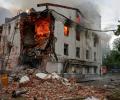
Russia has expressed gratitude for India's readiness to contribute to resolving the Ukraine conflict, while Ukraine's Foreign Minister praised India's ceasefire proposal as the "broadest" among those received. President Putin also acknowledged Prime Minister Modi's "very good ideas" for a mutual settlement, highlighting India's intensified diplomatic efforts focusing on Black Sea safety, grain exports, and energy supplies.
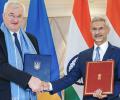
External Affairs Minister S Jaishankar reiterated India's support for an early end to the conflict in Ukraine after a conversation with his Ukrainian counterpart, Andrii Sybiha. The discussion follows recent diplomatic engagements, including meetings between Prime Minister Modi and both President Putin and President Zelenskyy.
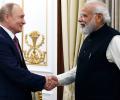
Russian President Vladimir Putin has stated that Prime Minister Narendra Modi possesses "very good ideas" for a mutual settlement of the Ukraine conflict and consistently raises the issue in their meetings. Putin also expressed appreciation for India's cultural diversity and unity, citing Modi's insights on the coexistence of various languages.

Ukrainian Foreign Minister Andrii Sybiha stated readiness to consider a truce covering energy infrastructure and the Black Sea.

Ahead of President Vladimir Putin's visit to India for the BRICS summit, Russia has expressed support for New Delhi's peace initiatives to resolve the Ukraine conflict. Discussions between Putin and PM Modi will cover defence, energy, technology, and the repatriation of Indian nationals from the Russian military, alongside addressing trade and investment ties.

External Affairs Minister S Jaishankar has publicly acknowledged India's intensified diplomatic efforts to resolve the Ukraine conflict, engaging directly with both Kyiv and Moscow. India is focusing on critical issues like Black Sea shipping safety, grain exports, and energy supplies, moving beyond its previous advocacy role. Jaishankar also highlighted India's historical ties with Russia and discussed the evolving global geopolitical landscape, including the repositioning of the US and the rise of China.

Pakistan has intensified its efforts to bring the US and Iran back to the negotiating table to end the war in West Asia, following President Trump's extension of the ceasefire. Pakistani officials have engaged with Iranian, Turkish, and British counterparts to promote dialogue and diplomacy for a peaceful resolution.

Pakistan's Prime Minister Shehbaz Sharif has engaged in extensive diplomatic efforts to de-escalate the conflict in West Asia, offering to host talks between the US and Iran and engaging with leaders from Saudi Arabia, Qatar, Malaysia, the UK, China, and the European Union.

Pakistan's Prime Minister Shehbaz Sharif used his UN General Assembly address to thank former US President Donald Trump for his "timely intervention" in the 2025 conflict with India, a claim India consistently denies. Sharif also raised the Kashmir issue and discussed the Indus Waters Treaty, while touting Pakistan's role in mediating US-Iran peace.

Prime Minister Narendra Modi met Iranian President Masoud Pezeshkian at the SCO summit, advocating for dialogue and diplomacy to resolve the West Asia conflict and expressing India's desire to expand and diversify trade with Iran. Pezeshkian, in turn, urged India to leverage its contacts to promote peace.

Pakistani Prime Minister Shehbaz Sharif has briefed Saudi Crown Prince Mohammad bin Salman on Pakistan's diplomatic efforts to de-escalate the situation in West Asia. This follows Pakistan's offer to host talks between the US and Iran to resolve the ongoing conflict.

Pakistan Prime Minister Shehbaz Sharif on Thursday signed the historic peace deal between the United States and Iran as a guarantor; the agreement will see the immediate reopening of the Strait of Hormuz and the lifting of the US naval blockade.

India successfully facilitated a significant diplomatic meeting between Iranian President Masoud Pezeshkian and UAE Crown Prince Sheikh Khaled bin Mohamed bin Zayed Al Nahyan on the sidelines of the BRICS Summit in New Delhi. This interaction, a diplomatic breakthrough given ongoing West Asia conflicts, occurred as BRICS adopted a declaration urging restraint and protection of civilians in the region, highlighting the bloc's commitment to peace and stability.

Iranian President Masoud Pezeshkian concluded his visit to India for the 18th BRICS Summit, announcing that Iran and the UAE agreed to move past previous tensions. This diplomatic breakthrough occurred during talks with Abu Dhabi's Crown Prince on the summit sidelines. Pezeshkian also met with PM Modi to discuss bilateral ties and West Asia developments, with Modi emphasising dialogue for regional peace. The BRICS summit adopted the New Delhi Declaration 2026, calling for global governance reforms and de-escalation in West Asia.

External Affairs Minister S Jaishankar stated that India is in continuous dialogue with both Ukraine and Russia, seeking ideas and suggestions to mitigate or cease the ongoing conflict. Following his visit to Kyiv, Jaishankar reiterated India's stance that the war must end through dialogue and diplomacy, emphasising that trade decisions like oil purchases are not the solution to the conflict.

The BRICS grouping adopted a consensus joint declaration in New Delhi, successfully navigating differences on the West Asia conflict but notably omitting any direct mention of US strikes on Iran or Iranian military attacks on Gulf Arab nations. The declaration also criticised Israel's actions in Gaza and called for a concerted approach against terrorism.

Prime Minister Narendra Modi has called for the resolution of the West Asia crisis and the Ukraine conflict through dialogue and diplomacy, asserting that military action alone cannot achieve lasting peace. He made the remarks after talks with Norwegian Prime Minister Jonas Gahr Store.

Prime Minister Narendra Modi, addressing the SCO summit in Bishkek, called for a united front against terrorism and its financing, rejecting double standards. He emphasised resolving conflicts through dialogue and diplomacy, not battlefields. Modi also highlighted that connectivity projects must respect national sovereignty and territorial integrity, a veiled reference to China's Belt and Road Initiative. India's vision for SCO rests on security, connectivity, and opportunity.

Iran has denied sending a delegation to Islamabad for peace talks with the United States, contradicting Pakistan's claims of mediating the negotiations. The denial highlights a lack of confidence in Pakistan's ability to ensure security for high-level participants and underscores the fragile nature of diplomatic efforts between the US and Iran.

Iranian President Masoud Pezeshkian delivered a strong address at the UN General Assembly, rejecting US allegations against Iran and accusing Washington and Israel of aggression and terrorism. He criticised US sanctions, defended Iran's peaceful nuclear programme, and highlighted the Palestinian issue.
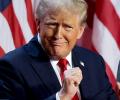
US President Donald Trump announced that a deal to end the war with Iran would be signed on Sunday, with the strategic Strait of Hormuz immediately becoming 'open to all'. This follows indications from Pakistan that negotiations were in their final stages, though Iran has yet to comment on the timeline.

Chinese President Xi Jinping's arrival in Washington marks a pivotal moment for global diplomacy, as he advocates for a "partners, not rivals" approach to US-China relations amidst high-stakes discussions on trade, technology, and international stability.

India has condemned an attack on a Panama-flagged oil tanker off the coast of Oman, which resulted in one Indian seafarer going missing and 13 others being rescued. The Ministry of External Affairs is closely monitoring the situation and coordinating with Omani authorities for search and rescue operations, while also reiterating calls for de-escalation and safe navigation in the region.

Prime Minister Narendra Modi urged Russian President Vladimir Putin to move from 'endless war to the end of war' in Ukraine, emphasising that a peaceful resolution is humanity's shared priority.

Prime Minister Narendra Modi hosted Iranian President Masoud Pezeshkian in New Delhi for talks focusing on the West Asia situation, bilateral relations, and BRICS cooperation. The meeting, Pezeshkian's first visit to India as president, comes amidst heightened tensions in West Asia due to new US sanctions on Iran and concerns over global oil supplies from the Strait of Hormuz. Both leaders emphasised regional stability and economic resilience.

Pakistan is set to host a quadrilateral summit of foreign ministers from Saudi Arabia, Egypt, and Turkiye to discuss the ongoing conflict in West Asia and explore avenues for peace negotiations.

Prime Minister Narendra Modi and French President Emmanuel Macron discussed the escalating situation in West Asia, emphasising the need for dialogue and diplomacy to restore peace and stability in the region.

US President Donald Trump has lauded India as an 'essential partner' and 'trusted ally' in addressing regional challenges, particularly its 'big role' in West Asia peace efforts, following discussions with Prime Minister Narendra Modi at the G7 Summit.

US President Donald Trump and Pakistan Prime Minister Shehbaz Sharif have announced a landmark peace deal between the US and Iran, which includes the crucial reopening of the strategically important Strait of Hormuz and the immediate cessation of military operations in Lebanon.

Iran's foreign ministry spokesperson Esmaeil Baqaei on Sunday said that the recent meeting with US officials was the longest round of negotiations they have had in the past year.
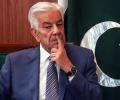
Pakistan's Defence Minister Khawaja Asif has reiterated the nation's unwavering commitment to the Makkah Joint Defence Agreement, underscoring its role in regional security following an attempted drone attack near the holy city of Mecca. The pact, signed by Pakistan, Turkiye, and Saudi Arabia, establishes a framework for collective deterrence against armed attacks.

During the 18th BRICS Summit in New Delhi, Chinese President Xi Jinping and Prime Minister Narendra Modi held a bilateral meeting, outlining a four-point approach for the steady and long-term development of China-India relations. The leaders stressed strategic understanding, win-win cooperation, mutual respect, and inclusive multilateral engagement, reaffirming their commitment to resolving the boundary question and addressing economic concerns. They also discussed global challenges and strengthening people-to-people ties.

US President Donald Trump announced a finalised peace deal between the US and Iran, set for signing on June 19 in Switzerland, with key figures like J D Vance, Steve Witkoff, and Jared Kushner from the US side, and Abbas Araghchi and Mohammad Bagher Ghalibaf representing Iran, alongside Pakistani mediators Field Marshal Asim Munir, Shehbaz Sharif, Ishaq Dar, and Mohsin Naqvi, playing crucial roles in the diplomatic breakthrough.

Top leaders from the US, Iran, and Pakistan, along with other nations, have gathered in Switzerland for high-level talks aimed at restoring peace in West Asia. These negotiations follow a recently signed Memorandum of Understanding between the US and Iran, initiating a 60-day window for a deal. Discussions focus on Iran's nuclear programme and the fragile interim peace deal, amidst renewed tensions and the fluctuating status of the Strait of Hormuz.

Iranian Foreign Minister Abbas Araghchi has urged Pakistan to use its diplomatic influence to help de-escalate the current regional situation and support efforts to maintain the ceasefire.

Prime Minister Narendra Modi on Friday conveyed to Russian Foreign Minister Sergey Lavrov that India stands ready to contribute in any way to the peace efforts to resolve the conflict in Ukraine

Uncertainty surrounds the planned second round of peace talks between the US and Iran in Islamabad, as both sides engage in brinkmanship. Despite Pakistan's security preparations, Iran has yet to confirm its attendance, citing a lack of seriousness from the US in pursuing diplomacy and violations of the ceasefire.
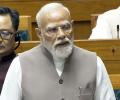
Prime Minister Narendra Modi addressed Parliament on the West Asia crisis, advocating for dialogue and diplomacy, ensuring the safety of Indians in the region, and addressing concerns about fuel and food security.
